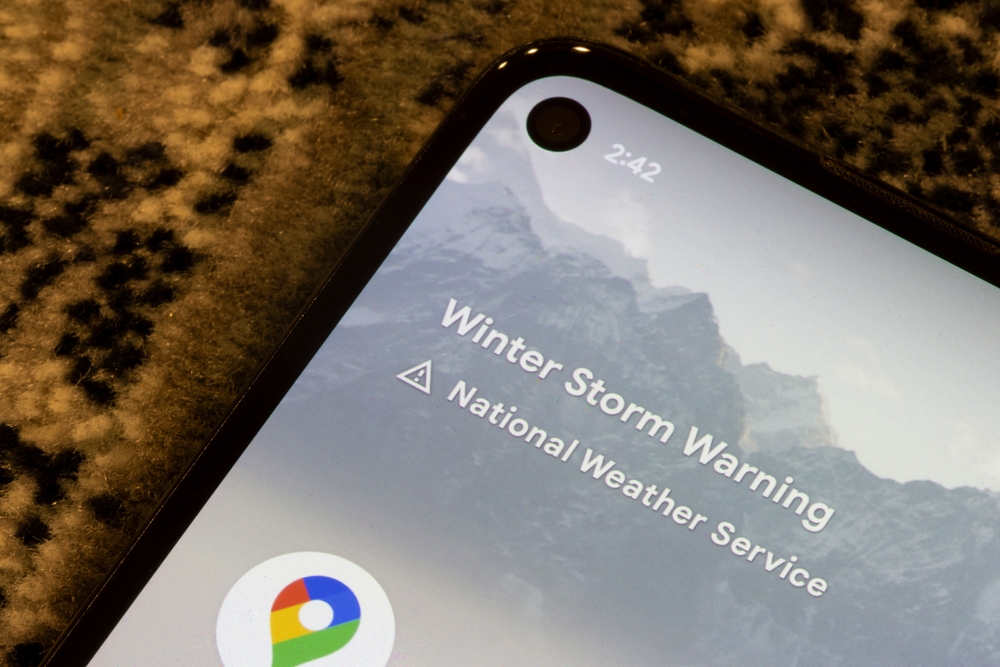
Experts are raising concerns that younger generations could find themselves particularly vulnerable if a major cyberattack disrupted digital navigation systems, potentially leaving millions unable to find their way around without relying on apps such as Google Maps.
For many people, reaching for a smartphone or switching on a satellite navigation system has become second nature whenever they need directions. However, specialists warn that becoming too dependent on digital technology could create serious problems if those services suddenly stopped working.
As cyberattacks continue to pose an increasing concern around the world, experts are encouraging people to rediscover a traditional but essential life skill: knowing how to read a map.
The warning comes as the UK considers the possibility of further cyber disruptions and the potential consequences they could have for everyday life.
Richard Horne, head of the National Cyber Security Centre, has previously emphasised the importance of preparing the country for cyberattacks, particularly following incidents that have disrupted essential services, including supermarket refrigeration systems.
The government has also encouraged households to consider keeping emergency supplies at home in case essential services become unavailable.
Meanwhile, former Prime Minister Rishi Sunak has suggested that a modernised version of national service could help improve the country’s overall resilience and preparedness.
However, navigation specialists believe there is another relatively simple measure people can take to prepare for potential disruptions: learning how to find their way around without depending on a smartphone, an internet connection or digital navigation services.
Experts Say Younger People May Be Losing Traditional Map-Reading Skills
Speaking to the Daily Mail, Andy Gardiner, head of research at Ordnance Survey, acknowledged that the way younger generations interact with maps has changed significantly as digital technology has become part of everyday life.
With navigation apps now widely available, many people rarely need to unfold a traditional paper map or work out directions for themselves.
“The way younger people interact with mapping has undoubtedly changed, with digital maps and navigation apps now part of everyday life,” he said.
Despite these changes, Gardiner stressed that traditional navigation abilities remain valuable and should not be overlooked simply because modern technology has made finding directions easier.
“We still believe map-reading skills remain an important life skill, whether you’re using a paper map, a digital map or a smartphone,” he explained.
“Understanding how to read and interpret a map helps people navigate confidently, stay safe outdoors and discover new places.”
Gardiner also highlighted the importance of understanding basic navigation principles, including recognising directions, interpreting geographical information and identifying familiar landmarks.
These abilities could become particularly useful if digital navigation platforms suddenly became inaccessible because of a cyberattack or another technical disruption.
In practical terms, being able to work out how to travel from one location to another without constantly asking a smartphone for directions could prove much more important than many people currently realise.
Human Behaviour Expert Warns It Is Not Just Younger People Who Could Struggle
Although younger generations may have less experience using traditional paper maps, experts believe the growing dependence on digital navigation is a problem that could affect people of all ages.
Human behaviour expert Michael Bond, author of Wayfinding: The Art and Science of How We Find and Lose Our Way, warned that regularly following instructions on a screen can prevent people from developing a strong understanding of their surroundings.
When someone relies entirely on turn-by-turn directions, they do not necessarily need to remember the streets they have travelled along or understand how different locations connect.
Bond explained that this could affect the way the brain processes geographical information and builds an internal understanding of an area.
“The spatial part of the brain – the hippocampus and surrounding areas – is completely inactive when we follow navigation instructions on a screen,” he said.
According to Bond, many people may not realise just how dependent they have become on digital navigation until they are forced to travel somewhere unfamiliar without assistance from their devices.
He suggested that difficulties would likely become more noticeable when people ventured outside their usual neighbourhoods or attempted journeys along routes they rarely travelled.
In such situations, people who normally depend on GPS instructions might struggle to recognise where they are, understand which direction they need to travel or work out how to reach their destination.
That could become a much bigger concern if a cyberattack or widespread technical failure suddenly made navigation applications unavailable across an entire region.
Experts Say Traditional Navigation Skills Can Be Relearned
Fortunately, there is some encouraging news for anyone who believes they would be completely lost without Google Maps.
Bond explained that navigation abilities are not permanently lost simply because people have become accustomed to using technology. Instead, these skills can be strengthened again through practice and a more conscious approach to travelling.
He emphasised that the human brain has not fundamentally changed since GPS navigation became widely available, meaning people remain capable of developing the mental abilities needed to navigate independently.
One particularly useful approach is learning to build what experts describe as a mental map.
Rather than blindly following every instruction provided by a navigation app, people can make a deliberate effort to remember important landmarks, recognise the direction in which they are travelling and understand how different streets and locations fit together.
For example, instead of simply waiting for a phone to announce the next turn, someone could pay attention to nearby buildings, road layouts, landmarks and the general direction of their journey.
Over time, these small habits can help people develop a clearer picture of their surroundings and become more confident travelling without constantly checking their screens.
The idea is to understand the route rather than simply follow instructions, allowing people to work out where they are and where they need to go even when digital assistance is unavailable.
Although smartphone navigation and digital maps are unlikely to disappear from everyday life anytime soon, experts believe that maintaining basic traditional navigation skills could provide an important safety net.
After all, technology can make travelling considerably easier, but it is not always guaranteed to work when people need it most.
And if a major cyberattack suddenly leaves navigation applications unavailable, knowing how to read a traditional map and understand your surroundings could make all the difference.
Do you have any thoughts about this news story? Let us know in the comments section on Facebook.