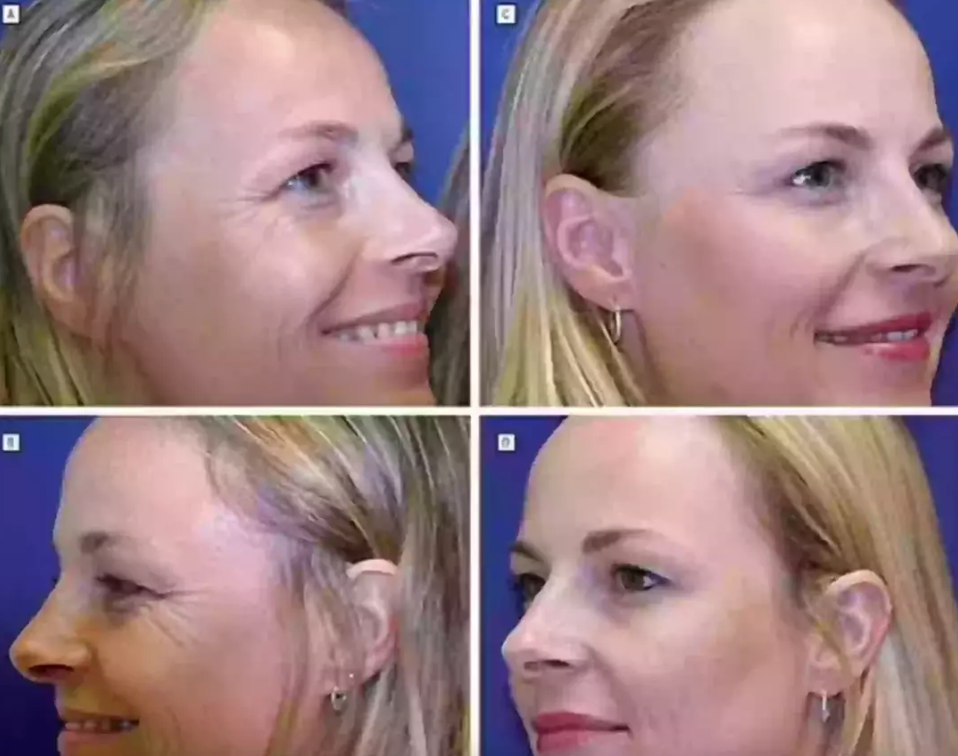
Identical twins have offered a fascinating glimpse into the potential long-term effects of Botox after one sister received regular injections for 20 years while the other chose never to undergo the treatment. The striking differences between their appearances have sparked renewed interest in how Botox can influence the visible signs of aging.
The sisters participated in a long-running medical study that followed the effects of the cosmetic treatment over several years. One twin began receiving Botox injections at the age of 25, while her identical sister decided not to use the procedure at all.
Botox, the brand name for botulinum toxin, is a prescription medication commonly used in cosmetic treatments to soften fine lines and wrinkles. However, its applications extend beyond appearance. Doctors also use it to treat medical conditions such as migraines, muscle stiffness, muscle spasms and excessive sweating.
Throughout the study, the twin who opted for Botox received injections approximately two to three times a year. The treatments primarily targeted her forehead and the frown lines between her eyebrows, areas where repeated facial movements can gradually contribute to wrinkles.
She also occasionally received injections to address crow’s feet, the small lines that develop around the outer corners of the eyes.
Dr. William Binder, the physician responsible for administering the injections, began documenting the sisters’ appearances in 2006, when both women were 38 years old.
Even at that early stage of the study, photographs revealed noticeable differences between the identical siblings. The sister who had regularly received Botox had a considerably smoother forehead and fewer visible lines around her eyes compared with her untreated twin, according to Derma Line.
However, the contrast became even more noticeable when researchers examined the sisters again six years later.
By that point, the twin who had never received Botox had developed deeper facial lines, a wider jawline and puffier-looking features. Although researchers could not establish whether these changes were directly caused by the absence of Botox treatments, the comparison suggested that regular injections may have played a role in slowing the visible signs of aging.
Both sisters reported using sunscreen regularly and maintaining healthy lifestyles, making excessive sun exposure or unhealthy habits less likely explanations for the differences.
Nevertheless, researchers acknowledged that environmental factors could have influenced their appearances. The untreated twin lived in Munich, while her sister resided in Los Angeles, a city that generally experiences considerably greater sun exposure.
Following his observations, Dr. Binder concluded that long-term Botox use could help prevent the development of static wrinkles, which are lines that remain visible even when the face is completely relaxed.
He also reported that the treatment appeared to be well tolerated over time. According to the study, no adverse effects had been reported after 13 years of continuous use.
Another Doctor Demonstrates Botox’s Effects by Treating Only Half Her Face
The findings from the twin study have also attracted attention from other medical professionals, including Dr. Bita Farrell, a California-based physician who recently conducted an experiment on herself to demonstrate how Botox can affect facial appearance.
With approximately two decades of experience administering injectable treatments, Farrell decided to treat only the right side of her face, leaving the opposite side completely untreated.
Her experiment focused on muscles that naturally pull the mouth and jaw downward, allowing her to compare how relaxing those muscles with Botox could influence facial expressions and the appearance of the lower face.
Two weeks after receiving the injections, Farrell shared the results with her social media followers, demonstrating the visible differences between the treated and untreated sides.
When she moved her face, the untreated side showed stronger muscle contractions, pulling the jawline and corners of her mouth downward.
The Botox-treated side, however, appeared smoother and more lifted, with fewer visible lines. Her cheek also seemed slightly higher and fuller, creating a noticeable difference between the two sides of her face.
Farrell explained that the results were connected to the way different facial muscles work together, with some responsible for pulling facial features upward and others naturally drawing them downward.
“Muscles of the face either pull up or pull down,” Farrell explained. “When the ones that drag the lower face down are relaxed with Botox, the cheek muscles dominate and lift everything up.”
According to experts, this effect can create several noticeable changes in facial appearance. By relaxing muscles that pull downward, Botox may help soften marionette lines, reduce the appearance of jowls, create a more defined jawline and give the overall face a more youthful appearance.
The treatment can therefore influence more than just forehead wrinkles and the fine lines commonly associated with aging.
What the Twin Study Reveals About Long-Term Botox Use
The identical twins’ comparison and Farrell’s personal experiment both offer interesting examples of how Botox can influence facial appearance over time.
While the twin study provided a rare opportunity to compare two genetically identical individuals with very different histories of cosmetic treatment, Farrell’s experiment demonstrated how targeting specific muscles can temporarily change the appearance of the lower face.
Together, the two examples highlight the potential benefits of Botox beyond simply smoothing individual wrinkles.
Although cosmetic injections remain a subject of debate, these observations suggest that consistent treatment may help reduce certain visible signs of aging and influence how facial features change over the years.
However, the researchers’ observations do not establish that Botox alone was responsible for every difference between the twins, particularly given the environmental differences in their lifestyles.
Nevertheless, their contrasting appearances provide a striking illustration of the potential long-term effects of the treatment and why Botox continues to attract attention from both medical professionals and people interested in cosmetic procedures.