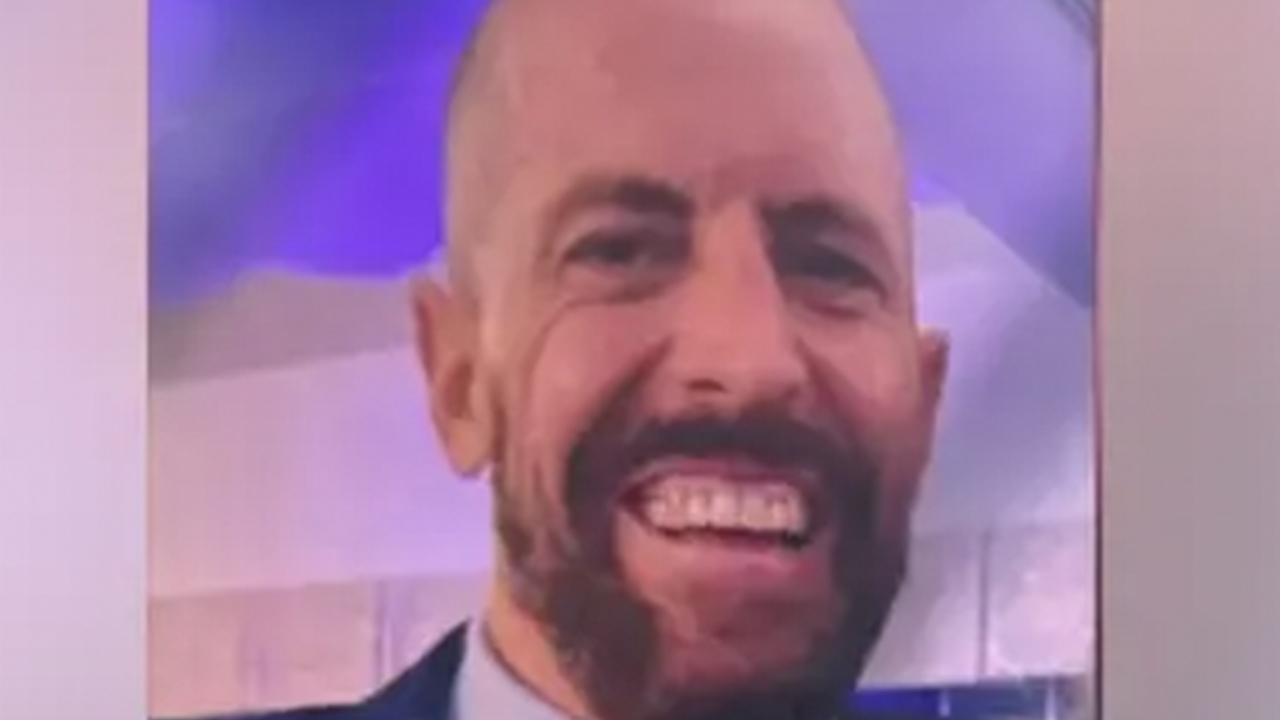
A Massachusetts cardiologist who vanished during what was supposed to be an ordinary Saturday morning bike ride was found dead the following day near a rural cow pasture.
The discovery brought a heartbreaking end to a search that had left his family, friends, and wider community desperately hoping for answers.
Dr. Daniel Arnett, 44, was last seen at approximately 10 a.m. on Saturday, November 7, 2026, while cycling in Newbury, Massachusetts. The area is known for its quiet rural roads, open farmland, and stretches of countryside.
When Arnett failed to return home, concern quickly grew. Police issued an appeal for information about his whereabouts, asking the public to look out for a man who had reportedly been wearing dark pants and a flannel shirt when he was last seen.
Authorities also urged residents in the surrounding communities to check their security camera footage. Investigators hoped recordings from doorbell cameras, home surveillance systems, and other devices might help establish which direction Arnett had taken.
Two particular details made the search especially difficult.
<text>Newbury Police Department</text>
Arnett had set out on his bicycle without his cellphone, and investigators had no information about the route he intended to take.
With no phone to contact him and no confirmed itinerary to follow, authorities had very little information about his movements. They were left trying to reconstruct his last known whereabouts through possible witness sightings and any available footage from the surrounding area.
According to Boston 25 News, investigators concentrated their efforts on determining where the doctor had been seen and whether anyone nearby had captured images of him during his ride.
Cycling, however, was nothing unusual for Arnett. His obituary would later describe him as an avid outdoorsman who loved spending time outside with family and friends.
Body Discovered Near a Cow Pasture
Tragically, the search took a devastating turn on Sunday, November 8.
Shortly after 2 p.m., authorities were called to an area near Tendercrop Farm in Newbury, where a deceased man had been discovered close to a cow pasture. The location was several miles from the area where Arnett had last been seen.
The discovery brought together several agencies, including the Newbury Police and Fire Departments, Massachusetts State Police detectives assigned to the Essex County District Attorney’s Office, and representatives from the Office of the Chief Medical Examiner.
Investigators soon established that the man found dead was the missing cardiologist.
On Monday, November 9, the Essex County District Attorney’s Office confirmed that the body belonged to Dr. Daniel Arnett of Beverly, Massachusetts.
For his loved ones, the confirmation ended the painful uncertainty surrounding his disappearance. But it also marked the beginning of an unimaginable loss for a family that had been desperately waiting for him to come home.
Authorities Rule Out Suspected Foul Play
In its initial statement, the Essex County District Attorney’s Office said investigators did not suspect foul play in connection with Arnett’s death.
The announcement was particularly important because authorities were also looking into another death in neighboring Rowley that same weekend. A man had been found in the Mill River area, but officials stressed that the two incidents were not connected.
Although Arnett’s identity had been confirmed, authorities did not immediately release the precise circumstances surrounding his death.
More information emerged several days later. On November 12, the New York Post reported that the Office of the Chief Medical Examiner in Boston had determined that Arnett died from a gunshot wound to the head and classified his death as a suicide.
The medical examiner’s finding answered one of the central questions surrounding the case. It was also consistent with the authorities’ earlier statement that they did not suspect another person had been involved.
However, no publicly verified explanation has been provided for why Arnett died by suicide.
Neither the medical examiner’s findings nor the family’s obituary identified a specific personal or professional circumstance that led to his death.
A Respected Cardiologist
Beyond the tragic circumstances of his passing, Arnett leaves behind a professional legacy built around caring for patients and protecting their cardiovascular health.
He worked as a cardiologist with Beth Israel Lahey Health, where he had been practicing since 2021. His clinical interests included cardiac imaging, heart failure, coronary artery disease, atrial fibrillation, and preventive cardiology.
His career in medicine followed years of education and highly specialized training.
Arnett earned his medical degree from the University of Colorado before completing an internal medicine residency at the University of Washington. He then continued his training through a cardiovascular fellowship at the University of Utah.
His academic achievements also extended beyond the medical field. He attended Colorado College, where he earned his bachelor’s degree and played football, before going on to receive a master’s degree in chemistry from the University of Denver.
His educational journey reflected years of dedication to learning and preparation for a demanding medical profession. Yet those who knew him also remembered someone whose passions, friendships, and family life extended far beyond the walls of a hospital.
A Husband, Father, and Avid Outdoorsman
Arnett was born in Salida, Colorado, and his obituary remembered him as a beloved husband, father, son, and brother.
He is survived by his wife, Anne Bernard Arnett, and their two sons, Spencer David Arnett and Louis Bernard Arnett. His surviving family also includes his parents, David and Margaret Arnett, his sister, Erin Arnett, and his brother, Scott Moore.
His obituary offered a glimpse into a man who embraced an active outdoor lifestyle. Cycling, downhill and cross-country skiing, hiking, and fishing were among the activities he enjoyed sharing with family members and friends.
Those interests make the circumstances of his disappearance especially heartbreaking. He had been doing something that was not simply a personal hobby, but also an important part of the outdoor lifestyle his family and friends remembered him for.
Photographs shared by loved ones show Arnett enjoying precious moments with his wife and children, including family outings and outdoor adventures.
The Wider Conversation About Mental Health
Arnett’s death has also brought renewed attention to a difficult and longstanding issue within the medical profession: the mental health challenges faced by doctors and other healthcare workers.
Medical professionals spend their working lives looking after patients, often in high-pressure environments where demanding decisions, long shifts, and emotional responsibilities are part of everyday life. Yet those same professionals can encounter significant obstacles when they need support themselves.
Research has raised concerns about depression, burnout, and suicide among physicians for many years.
A Good Morning America report published in December 2020 cited research presented at a 2018 American Psychiatric Association meeting, which estimated that between 300 and 400 physicians died by suicide every year in the United States.
One concern repeatedly highlighted by medical organizations is the stigma surrounding mental health treatment.
Some healthcare professionals have said they worry that disclosing a mental health diagnosis or seeking treatment could affect their medical licenses, professional credentials, or future career opportunities. These fears can make it more difficult for people working in healthcare to ask for help, even when they recognize that they need it.
Dr. Angela Mills, chair of emergency medicine at Columbia University, addressed the issue in comments reported by Newsweek.
“Health care professionals often forgo mental health treatment due to the significant stigma in both our society and the medical community, as well as due to the fear of professional repercussions,” Mills said.
Efforts to Improve Mental Health Support for Healthcare Workers
Efforts have been made to tackle these barriers and improve access to mental health support for medical professionals.
In 2022, President Joe Biden signed the Dr. Lorna Breen Health Care Provider Protection Act, named after an emergency physician who died by suicide in 2020.
The legislation was designed to strengthen mental health resources for healthcare workers while addressing contributing factors such as burnout and occupational stress.
More recently, in November 2025, the American Medical Association reported progress in efforts to remove intrusive questions about mental health history from medical licensing and credentialing procedures.
According to the organization, dozens of licensing boards and more than 1,800 healthcare organizations had introduced changes.
However, more recent research suggests that the challenges facing physicians remain widespread.
Latest Numbers
A 2026 survey conducted by The Physicians Foundation and Medscape, involving 1,000 physicians, found that 55% frequently experienced burnout, while 58% said they had experienced debilitating stress during the previous year.
The survey also revealed that 71% of physicians believed a stigma still existed within the medical profession surrounding mental health and seeking treatment.
These initiatives and findings reflect growing recognition that healthcare workers need access to confidential mental health support without unnecessary professional obstacles.
However, there is no evidence that burnout, workplace pressure, or concerns about seeking mental health treatment played any role in Arnett’s death.
As further information about his passing emerged, his family began preparing to come together with relatives and friends to celebrate and remember his life.
According to his obituary, a memorial service was scheduled for Saturday, November 14, at 10 a.m. at Cruiseport in Gloucester, Massachusetts.
The family also asked those wishing to make memorial donations to consider supporting the National Park Foundation, a choice that reflects Arnett’s love of the outdoors and the natural world.
If you or someone you know is struggling with the issues discussed in this story, help is available. You can call or text 988 to reach the 24/7 Suicide & Crisis Lifeline, or text HOME to 741741 to connect with the Crisis Text Line.
Another resource available to physicians in the United States is the Physician Support Line, which offers free and confidential mental health support from volunteer psychiatrists. The service is specifically designed for physicians and medical students who may be experiencing emotional distress, professional pressure, or other mental health concerns. It can be reached at 1-888-409-0141.