Coming across an adorable dog during a neighborhood walk is enough to brighten almost anyone’s day. Imagine seeing a friendly golden retriever strolling happily along the sidewalk, its coat shining in the sunlight and its tail wagging excitedly.
For many people, the natural reaction is to approach, bend down, and offer the dog a friendly greeting or a gentle pat.
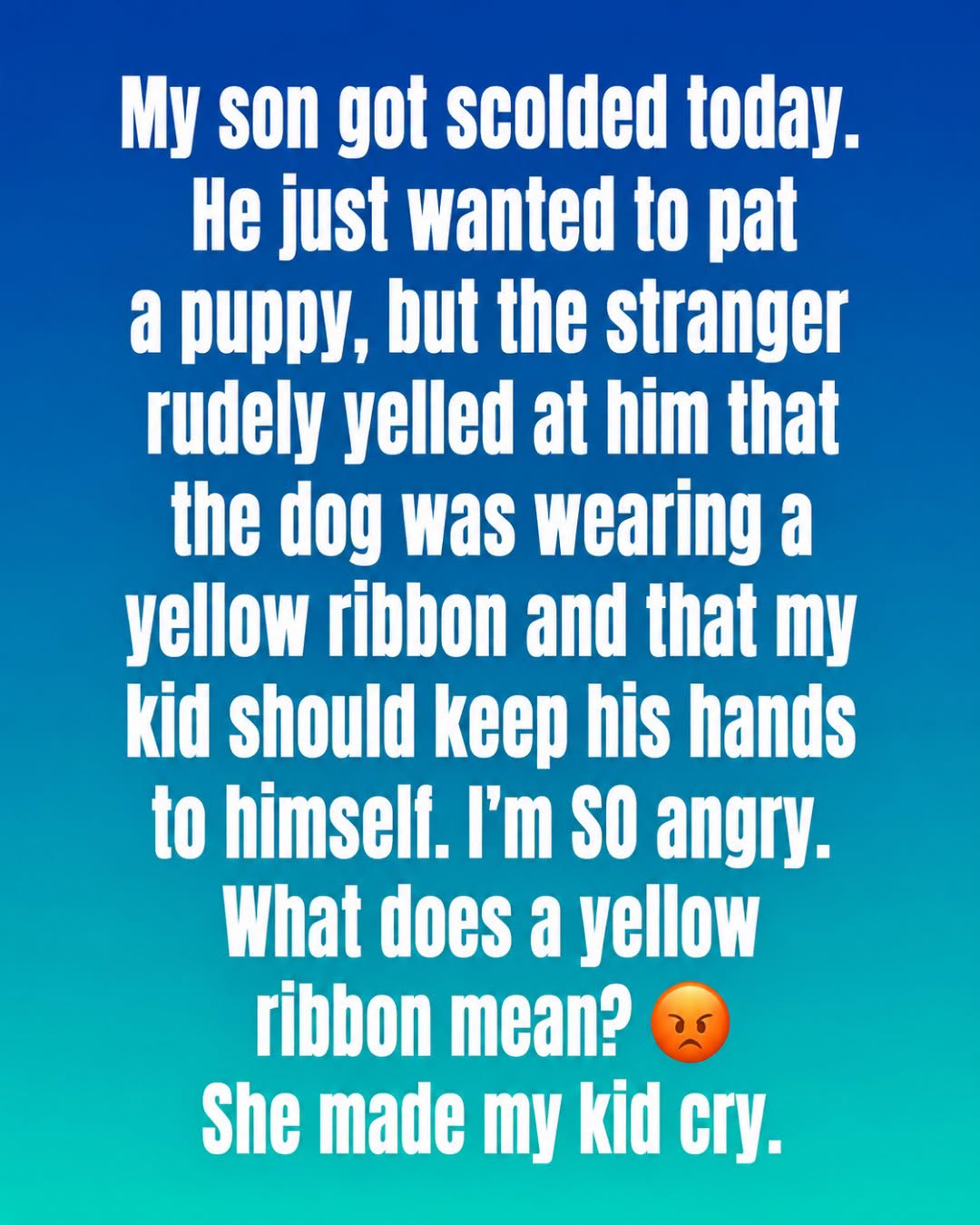
But what happens when the owner suddenly steps forward and politely asks you to keep your distance?
Looking more closely, you might notice a bright yellow ribbon attached to the dog’s collar, harness, or leash. While some people may mistake it for a fashionable accessory, a holiday decoration, or a souvenir from a local grooming salon, the small piece of fabric can communicate something much more important.
Ignoring this simple warning could cause unnecessary stress for the animal and potentially create an uncomfortable or dangerous situation for everyone involved.
That yellow ribbon is part of a widely recognized initiative known as the Yellow Dog Project. Its purpose is straightforward but important: to let people know that a particular dog needs additional personal space.
Understanding what the ribbon represents—and why approaching a dog wearing one without permission can be a mistake—can help protect both pets and the people around them.
What the yellow ribbon really means
The Yellow Dog Project uses a yellow ribbon or another visible yellow marker attached to a dog’s collar, harness, or leash to communicate that the animal needs extra space.
It is a simple visual signal that responsible dog owners can use to let strangers and other pet owners know that their dog should not be approached without permission.
Importantly, a yellow ribbon does not automatically mean that a dog is aggressive or dangerous.
Instead, it indicates that the animal may have particular physical, emotional, or behavioral needs that make unexpected interactions difficult.
Some dogs simply need more time and distance when meeting unfamiliar people or animals. Giving them that space can prevent stressful encounters before they begin.
The initiative also gives owners a polite way to communicate their dog’s needs without having to explain the situation to every person they meet during a walk.
Why would a dog need to wear a yellow ribbon?
There are several health-related and behavioral reasons why an owner might choose to place a yellow ribbon on their pet.
Some dogs are recovering from veterinary surgery and need to avoid sudden movements, physical contact, or excitement while they heal.
Others may be living with painful conditions such as arthritis, making unexpected touching or enthusiastic interactions uncomfortable.
Age can also play an important role. Older dogs experiencing reduced vision or hearing may become frightened when unfamiliar people or animals suddenly approach them.
Rescue dogs represent another group that may benefit from this visual warning.
Some newly adopted pets have experienced difficult circumstances and need time to overcome anxiety, develop confidence, and adjust to unfamiliar surroundings. For these animals, an unexpected approach from a stranger can be overwhelming.
The yellow ribbon helps communicate that these dogs need patience and understanding while they become more comfortable in their environment.
Even friendly dogs can become overwhelmed
One important thing to remember is that wearing a yellow ribbon does not necessarily mean a dog has behavioral problems.
Even the sweetest, most affectionate, and best-trained family companion can become uncomfortable when approached too quickly, surrounded by strangers, or cornered by excited people.
Dogs have individual boundaries, just like humans. A pet that enjoys attention from familiar family members may not feel comfortable being touched by an unfamiliar person.
Ignoring those boundaries can cause unnecessary fear and stress. In certain situations, a frightened dog may react unexpectedly, potentially putting both the animal and the approaching person at risk.
Respecting the owner’s request for space is therefore about more than good manners. It is an important way to protect the dog’s physical and emotional well-being.
What should you do when you see a yellow ribbon?
If you encounter a dog wearing a yellow ribbon during your daily walk, the best response is simple: give it room.
Avoid approaching the animal, reaching toward its head, attempting to pet it, or encouraging your own dog to make contact.
If you are walking with another pet, keep it safely leashed and maintain a comfortable distance.
Should you wish to interact with the dog, ask the owner for permission from a respectful distance and wait for their response. Never assume that a friendly appearance means the animal is comfortable with strangers.
The most important thing is to respect the message the owner is trying to communicate.
A small yellow ribbon may look like an insignificant detail, but it can represent an important need for safety, patience, and understanding.
Being a responsible animal lover does not always mean approaching every dog you meet. Sometimes, the kindest thing you can do is simply give an animal the space it needs.
After all, respecting a dog’s boundaries is one of the simplest ways to show that its comfort and well-being come first.