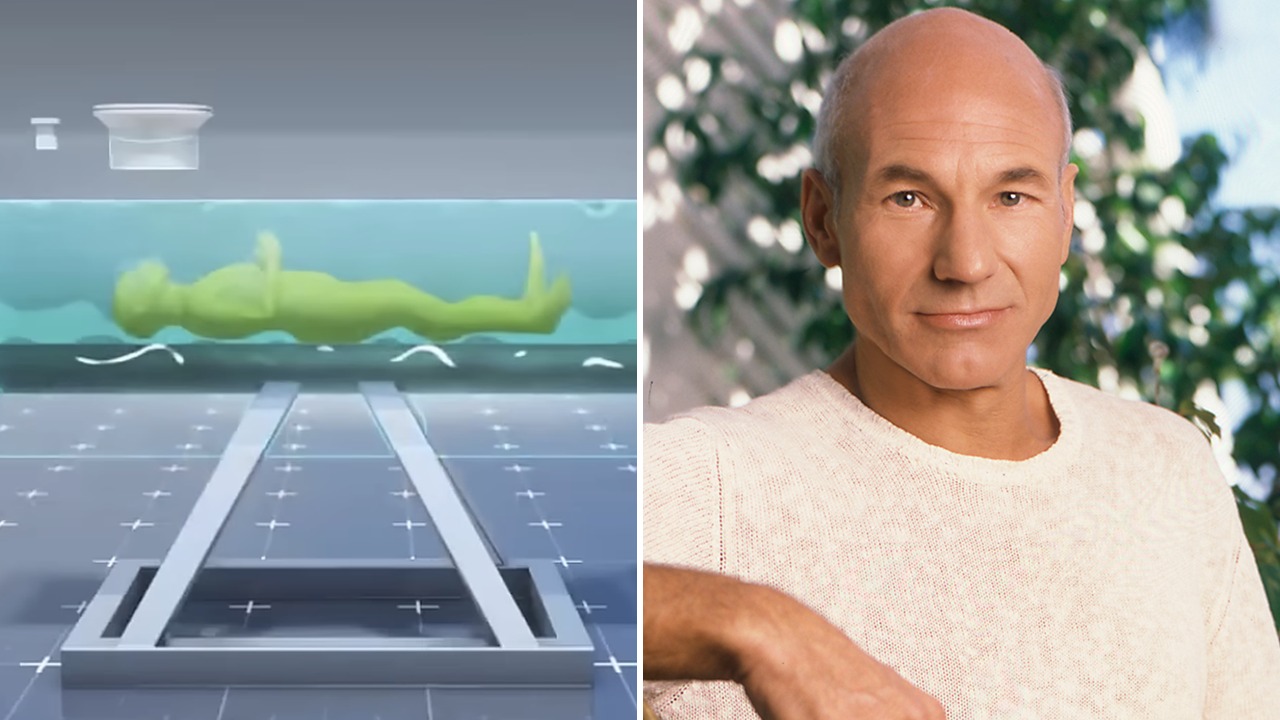
Sir Patrick Stewart’s death certificate has revealed what happened to his remains following his death last month, shedding light on a lesser-known method of handling human remains that many people may never have heard of.
The legendary British actor underwent water cremation, an alternative to traditional burial and flame cremation, according to the official document. Stewart, best known around the world for portraying Captain Jean-Luc Picard in Star Trek: The Next Generation and Professor Charles Xavier in the X-Men films, died at his home in Los Angeles on October 28. He was 86 years old.
According to TMZ, Stewart’s death certificate lists the cause of death as “cardiopulmonary arrest and a neurocognitive disorder with Lewy body.” Lewy body dementia is a progressive condition that affects a person’s thinking, reasoning and ability to live independently.
When news of his death was announced the following day, his longtime spokesperson, Kelly Bush Novak, revealed that the actor had experienced “a brief and poignant journey with Alzheimer’s disease and Lewy body dementia.”
“He has been held in the warm embrace of family and friends, surrounded by live music, prayer, tears, laughter and the kind of profound emotion that only he could inspire after a lifetime of devotion to us all,” she said.
What water cremation actually involves
The death certificate also reveals that Stewart’s remains underwent a process known as alkaline hydrolysis on November 3. The procedure is commonly referred to as water cremation or aquamation.
An animation shared on YouTube provides a visual explanation of how the process works. The body is placed inside a pressurized metal cylinder containing water and a strong alkaline chemical called potassium hydroxide. The mixture is then heated to approximately 150°C, or around 300°F.
According to the video, the process “liquifies everything except for the bones.” Once the procedure is complete, the remaining bones are dried and ground into a fine white powder before being placed in an urn and returned to the family.
The process also includes the separate collection and treatment of mercury from dental fillings, preventing it from being released into the environment.
Some families make another choice with the remaining liquid, keeping it and using it to water a garden or a tree.
Why some families choose water cremation
Water cremation is increasingly viewed as a gentler and more environmentally friendly alternative to traditional flame cremation or burial.
One of its most notable supporters was South African Archbishop Desmond Tutu, who chose the method following his death in 2021.
Stan Hussey, an engineer who helped develop a water cremation machine, previously spoke to Castanet News about the process, describing it as a “much more pleasant” way for families to say goodbye to their loved ones.
He also explained that the resulting remains have a distinctive appearance, describing them as “pretty much pure white and very soft.”
A remarkable career spanning six decades
Stewart began his screen career in 1967 with an appearance on the British television soap opera Coronation Street. Four years later, he made his Broadway debut, marking another important step in what would become an extraordinary acting career.
However, his major breakthrough came in 1987, when he was cast as Captain Jean-Luc Picard in Star Trek: The Next Generation. The role would become one of the defining performances of his career, with Stewart portraying the iconic Starfleet captain across seven television seasons, four films and the Paramount+ series Star Trek: Picard.
The actor is survived by his wife, singer-songwriter Sunny Ozell, as well as his two children, Daniel and Sophie, from his first marriage.
Two weeks after Stewart’s death, Ozell shared an emotional tribute to her husband on Instagram, reflecting on their relationship and the love they shared.
“We left nothing unsaid. He knew I loved him, and I know he loved me,” she wrote.
She continued: “My heart had to grow to contain my love for Patrick, and he changed me for the better, forever.”