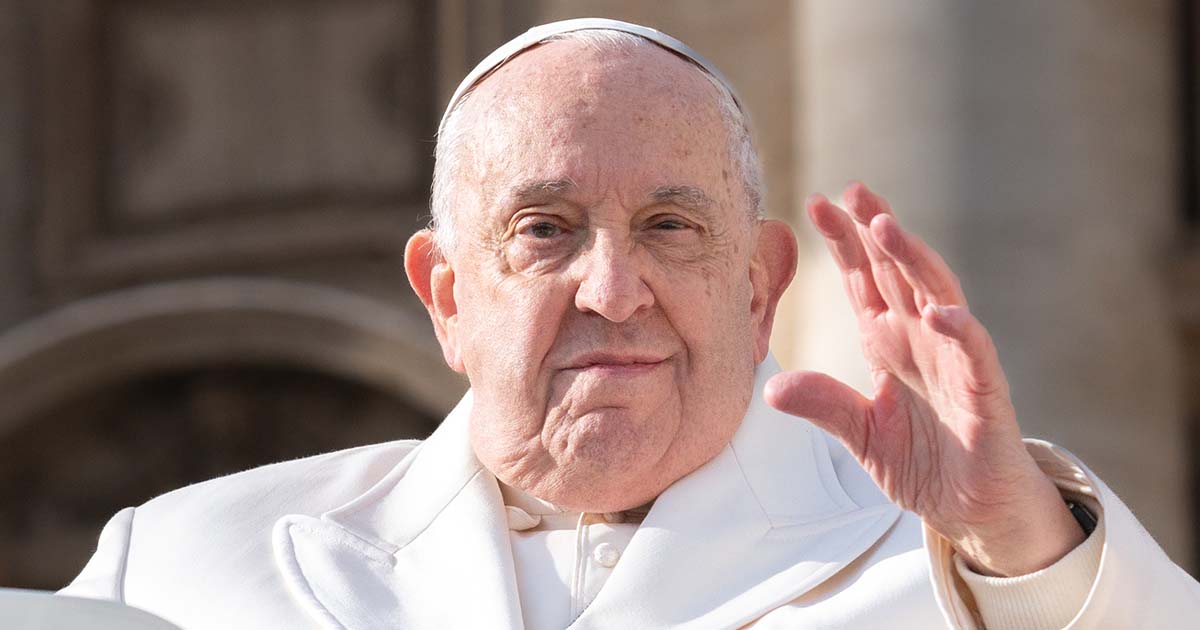
Pope Francis wrote about encounters with the devil, a terrifying vision of the entrance to hell and a profound spiritual crisis over how he should exercise his authority, according to a newly published book based on his private diaries.
The Private Diary of Pope Francis was released on Tuesday, November 24, by the Vatican Publishing House, according to Vatican News. The book was compiled by Cardinal Víctor Manuel Fernández, an Argentine cardinal and one of Francis’ closest aides, who selected passages from the diaries and added his own commentary.
The entries cover a period stretching from December 1992 to August 2024.
Across its 160 pages, the book focuses primarily on Francis’ spiritual life rather than the political affairs of the Catholic Church. It offers an unusually personal glimpse into the thoughts and struggles of the first Latin American pope, who died on Easter Monday, April 21, 2025, at the age of 88.
How Did Pope Francis’ Diary Come to Light?
Francis did not keep a diary consistently throughout his life. What eventually became a record of some of his most private reflections began as a planner for 1992, when he was serving as a bishop in Argentina.
He filled 86 pages while still in Argentina and another 55 pages during his papacy.
Fernández recalled that Francis once showed him an old, leather-bound agenda filled with handwritten notes. According to the cardinal, the pope presented it to him with the words: “From this, you will all see.”
Fernández later told Pope Leo XIV about the writings, saying that the new pope showed “intense interest” in them, according to the Associated Press.
Fernández also revealed that Francis had recorded his most intimate thoughts using an indecipherable code. Those passages have not been reproduced in the published book.
What Did Francis Write About the Devil?
Among the most striking revelations in the diary are Francis’ descriptions of what he called “frequent demonic attacks.”
He recounted three encounters with the devil: two during his time as archbishop of Buenos Aires and another in 2018, following a visit to Chile that had been overshadowed by a major clerical abuse scandal.
Francis described the devil as having “eyes of fire,” with an appearance that was both threatening and seductive.
In an entry written just months before his death, he reflected on those experiences, saying he had never been able to forget the eyes he saw during the first two encounters.
During the third incident, he said he heard the devil’s voice, which he described as “triumphant,” declaring that he had achieved everything he wanted.
Francis wrote that he eventually managed to leave the encounter and credited God with freeing him.
His references to the devil were not limited to his private writings. Throughout his papacy, he frequently spoke publicly about the subject, often connecting evil to everyday behaviors such as gossip and the pursuit of money.
“The devil enters through the pockets,” was one of his recurring warnings.
What Was the ‘Entrance to Hell’?
Another particularly disturbing passage describes a dream Francis experienced in 2018, during which he believed he had seen “the entrance to hell.”
He characterized the vision as “pagan seduction in full force,” explaining that it had left him terrified. In response, he grabbed his rosary, describing it as “a weapon.”
Accounts differ over precisely how Francis connected the experience to the events unfolding around him.
The Associated Press reported that the vision came as he was beginning to understand the full extent of the sexual abuse scandal involving members of the clergy. Other accounts, however, connect the experience to his growing awareness of the dangers of becoming self-sufficient.
In his diary, Francis also reflected on how the belief that he could resolve every problem by himself had brought him “to the gates of hell.”
What Was Behind His Spiritual Crisis?
The book reveals that Francis experienced a significant spiritual crisis during 2021 and 2022, rooted in what he described as a “curiosity” about exercising power and the temptation to believe he could manage everything independently.
He later explained that the experience was intertwined with “governance issues, pressure regarding decisions to make, and aridity and desolation.”
According to Fernández, the crisis centered on the temptation to feel “above the world,” a position Francis recognized as spiritually dangerous.
In response, the pope sought to become more humble and patient. He also deliberately avoided symbols associated with papal “majesty,” choosing to live in a Vatican guesthouse and wear simple orthopedic shoes.
Fernández recalled one example that illustrated Francis’ approach to exercising authority.
A bishop once asked him why he had not removed a Vatican official who had publicly spoken against him. After remaining silent for a considerable time, Francis explained that he sensed God did not want him to become a “puppeteer” who manipulated other people.
In a diary entry dated December 30, 2022, Francis wrote that he had resisted the temptation to treat “others like puppets.”
The Associated Press reported that this spiritual crisis coincided with a difficult period for Francis’ physical health. In July 2021, he spent 10 days in hospital undergoing surgery on his colon.
Fernández also suggested that two of Francis’ final major teaching documents, published in 2023 and 2024, emerged from the spiritual struggles and reflections he experienced during that period.
What Did He Say About the Abuse Scandal and Pope Leo XIV?
The diary also offers a personal account of Francis’ reaction to the abuse crisis in Chile, where he faced criticism after initially dismissing accusations made against a bishop.
He later apologized, and every bishop in Chile offered to resign.
Reflecting on the controversy, Francis wrote that he had been “Devastated” and admitted: “I didn’t think it was so serious.”
He also described the moment as having “fallen off the cot,” an expression that Fernández explained refers to suddenly waking up to a reality that had previously gone unrecognized.
The writings also contain warm words about Francis’ eventual successor, Cardinal Robert Prevost, who is now Pope Leo XIV.
Fernández said Francis considered Prevost “irreproachable.” The former pope also expressed generous views about some of his critics, including Cardinals Robert Sarah and Gerhard Müller.
Alongside his spiritual struggles and reflections on Church leadership, the diary reveals how physically and emotionally exhausted Francis sometimes felt.
In 2019, he wrote that he was “exhausted, almost without spiritual support.”
Francis rarely took days off and never left the Vatican for a vacation. Fernández described his commitment to his responsibilities as “total dedication,” adding that it reflected “heroism in pastoral charity.”
The publication of Francis’ private writings adds to a relatively small collection of personal diaries and documents made public after the deaths of popes. The diaries of Pope John XXIII were published following his death, as were some of the personal papers belonging to Pope John Paul II.
An English-language edition of The Private Diary of Pope Francis is being released in the United States and Canada by Image Books, an imprint of Penguin Random House.
The newly published reflections offer readers a rare opportunity to explore the private spiritual struggles, doubts and experiences of a pope whose public life was often defined by his calls for humility, compassion and faith.