Then, in a matter of seconds, everything changed.
Marianne reached into her handbag, pulled out a loaded pistol and opened fire on Grabowski. She fired eight shots, seven of which struck him. The convicted sex offender collapsed onto the courtroom floor and died at the scene.
The grieving mother was immediately arrested. Yet she showed little sign of regret over what she had done. Her actions would earn her the nickname “Revenge Mom,” and the case would trigger a nationwide debate about grief, justice and revenge.
More than four decades later, people still disagree about whether Marianne was a mother pushed beyond her limits by an unimaginable tragedy or a woman who crossed a line by taking the law into her own hands.

A Troubled Childhood and a Difficult Life as a Single Mother
The loss of a child is often described as the most devastating experience a parent can endure. For Marianne Bachmeier, that nightmare became reality on May 5, 1980.
At the time, Marianne was a struggling single mother living in Lübeck, northern Germany. During the early 1980s, she ran a pub while raising her young daughter, Anna, largely on her own.
However, Marianne’s life had been difficult long before the tragedy that would make her internationally known.
Her childhood was marked by suffering and traumatic experiences. Her father had been a member of the Waffen-SS, one of the most infamous organizations in Nazi Germany.
As a young woman, Marianne was raped several times by different men. At just 16 years old, she became pregnant. Unable to raise a child alone at such a young age, she made the difficult decision to give her baby up for adoption.
Two years later, when she was 18, she became pregnant again. Once more, she placed her baby with an adoption agency.
In 1973, Marianne gave birth to her third child, a daughter named Anna. This time, despite the challenges of being a single mother, she decided to raise the little girl herself.
According to accounts of the family, Anna was a happy, friendly and open-minded child. She was the center of her mother’s world, and the two shared a life together in Lübeck.
But their lives were about to be destroyed by a crime that would leave Marianne consumed by grief.

What Happened to Seven-Year-Old Anna?
In May 1980, Marianne and Anna had an argument. Following their disagreement, the seven-year-old decided to skip school and walk to a friend’s house instead.
She never arrived.
While making her way there, Anna was kidnapped by Klaus Grabowski, a 35-year-old local butcher. He took the little girl to his apartment and kept her there for several hours.
During that time, Grabowski sexually abused Anna before eventually strangling her to death.
After killing the child, he placed her body inside a box and concealed it in a hidden location along the bank of a canal.
Grabowski later returned to the area, intending to bury Anna’s body. However, he was arrested that same evening at his favorite pub in Lübeck after his fiancée reported him to the police.
For Marianne, the discovery of what had happened to her daughter marked the beginning of a nightmare from which she would never fully recover.
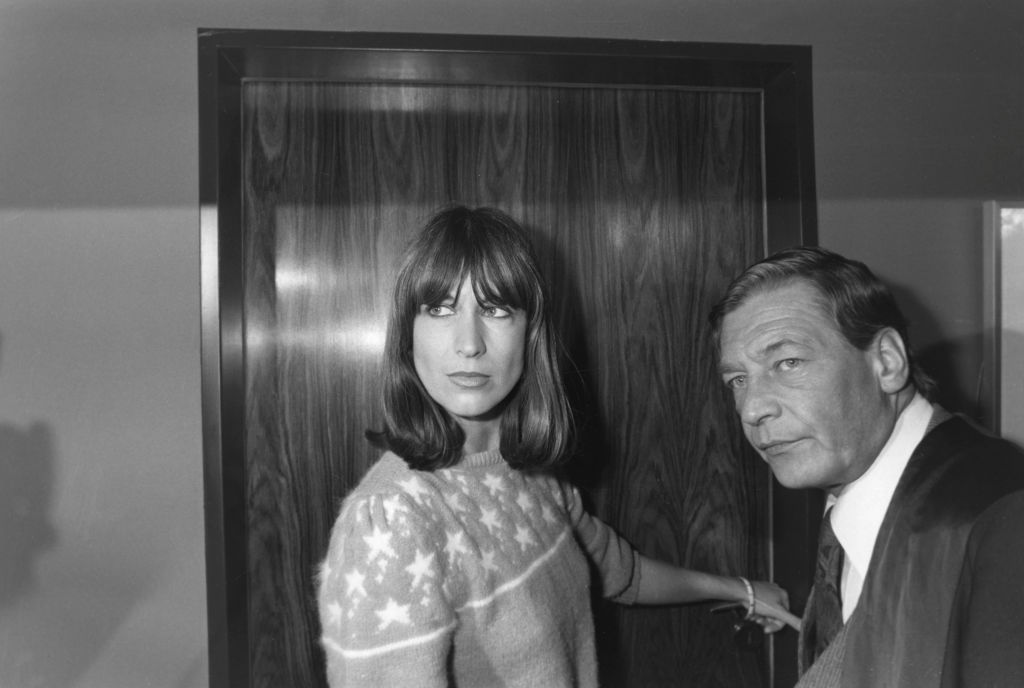
The Accused Murderer Tried to Blame the Little Girl
As investigators examined Grabowski’s background, they discovered that he already had a criminal history involving sexual offenses against children.
He had previously been convicted of sexually assaulting two girls and had served time in prison.
During his imprisonment in 1976, Grabowski voluntarily underwent castration. Two years later, he began hormone treatment intended to reverse the effects of the chemical castration because he wanted to maintain a sexual relationship with his fiancée.
Following his arrest for Anna’s murder, Grabowski immediately confessed to killing the child. However, he denied having sexually abused her.
His defense during the trial became even more disturbing when he attempted to shift the blame onto his seven-year-old victim.
Grabowski claimed that Anna had tried to seduce and blackmail him. According to his version of events, the little girl had threatened to tell her mother that he had touched her inappropriately unless he gave her money.
He presented this alleged threat as the reason he had killed her, effectively attempting to make the murdered child responsible for his own actions.
The court did not believe his explanation.
But for Marianne, hearing the man accused of murdering her daughter make such claims was almost unbearable. His statements intensified her anger, helplessness and frustration.
She had already endured the unimaginable pain of losing her little girl. Now she was forced to sit through a trial in which the accused was attempting to discredit the memory of the child he had killed.

March 6, 1981: The Shooting That Shocked Germany
On the third day of Grabowski’s trial, March 6, 1981, Marianne decided that she could no longer simply sit and listen.
Instead of waiting for the court to deliver its verdict, she made a decision that would change her life forever.
Somehow, Marianne managed to smuggle a loaded Beretta M1934 pistol into the courtroom, passing security checks and the guards without being detected.
Shortly after entering the courtroom, she reached into her handbag, pulled out the weapon and aimed it at Grabowski.
She fired repeatedly, emptying the magazine. Seven of the eight bullets struck him, and he immediately collapsed.
Grabowski died on the courtroom floor.
The shooting took place in front of people attending the proceedings, transforming a murder trial into a scene of extraordinary violence.
After firing the shots, Marianne dropped her pistol. She then reportedly shouted:
“He killed my daughter… I wanted to shoot him in the face, but I shot him in the back … I hope he’s dead.”
According to two police officers who witnessed the incident, Marianne also called Grabowski a “pig” after opening fire.
Police arrested her immediately inside the courtroom. She was initially charged with murder.
Marianne’s Own Courtroom Battle
In 1982, Marianne faced trial for killing Grabowski. During the proceedings, she claimed that she had fired the shots while in a dreamlike state after visualizing her daughter in the courtroom.
However, expert witnesses offered a different assessment.
According to their testimony, the way Marianne handled the weapon suggested that she had received special practice with the pistol. Their observations indicated that the shooting had required preparation and was not simply an uncontrolled reaction to the emotional pressure of the trial.
Doctors also examined Marianne during the proceedings and asked her to provide a handwriting sample.
Her response was a short but deeply emotional sentence:
“I did it for you, Anna.”
She decorated the handwriting sample with seven small hearts. Many people interpreted them as a symbolic tribute to the seven years her daughter had lived.
The message became one of the most memorable details of the case, reflecting the grief that continued to define Marianne’s life.
If convicted of the most serious charge, Marianne faced the possibility of spending the rest of her life in prison.
The Media Turned Her Into an International Figure
Marianne’s actions attracted enormous media attention, not only in Germany but around the world.
Newspapers and television stations closely followed the case. Journalists quickly gave her the nickname “Revenge Mom,” and the public became divided over whether she deserved punishment or sympathy.
Many people supported Marianne, seeing her as a grieving mother who had experienced a tragedy beyond what anyone should have to endure.
Her actions received considerable praise, encouragement and understanding, even though she had deliberately carried out an act of vigilante justice inside a courtroom.
Initially, much of the media portrayed her almost as a saint. She was presented as a loving mother whose actions had been driven by the loss of her beloved daughter.
However, that image began to change as journalists investigated her personal history.
Newspaper reports revealed that Marianne had given up her first two children for adoption. Other details about her lifestyle also attracted attention, including the amount of time she spent working at the pub she operated.
These revelations complicated the original portrayal of her as a completely self-sacrificing mother and introduced a more critical perspective on her personal life.
Six Years in Prison: A Sentence That Divided Germany
In 1983, Marianne was convicted of premeditated manslaughter and unlawful possession of a firearm.
The court sentenced her to six years behind bars. However, she was released after serving three years.
Her punishment immediately sparked another national debate. Some believed that the sentence was too harsh considering the circumstances surrounding Anna’s murder. Others argued that killing someone in a courtroom could not be justified, regardless of the emotional circumstances.
A survey conducted by the Allensbach Institute illustrated the divisions within German society.
Approximately 28 percent of respondents considered the six-year sentence appropriate. Another 27 percent believed it was too severe, while a further 25 percent thought the punishment was too lenient.
The figures showed that even after the legal proceedings had ended, Marianne’s actions remained a deeply divisive subject.
She Left Germany and Moved to Nigeria and Sicily
After serving her prison sentence, Marianne emigrated to Nigeria, where she married a German teacher.
The marriage eventually ended. In 1990, the couple divorced, and Marianne moved to Sicily, Italy, in an attempt to start another chapter of her life.
Unfortunately, her health later deteriorated. Marianne was diagnosed with pancreatic cancer, forcing her to return to Germany and her hometown of Lübeck.
Although many years had passed since the courtroom shooting, the incident had not disappeared from public memory. German newspapers continued revisiting the case well into the 1990s.
Her Rare Interviews Revealed More About Her Decision
In 1994, thirteen years after the shooting, Marianne gave a rare interview on German radio.
During the conversation, she discussed the circumstances surrounding her daughter’s murder and explained why she found Grabowski’s actions and statements so difficult to accept.
“I think there is a very big difference if I kill a little girl because I’m afraid I then have to go to prison for my life. And then also the ‘how’, so that I stand behind the girl and, strangle her which is taken literally from his statement: ‘I heard something come out of her nose, I was fixated, then I could not stand the sight of her body any longer,’”
Her comments reflected the anger she continued to feel toward the man responsible for taking her daughter’s life.
In 1995, Marianne appeared in another interview, this time with German television channel Das Erste.
During the interview, she admitted that shooting Grabowski had been a carefully considered decision. She explained that she had wanted to stop him from continuing to spread what she believed were lies about Anna.
Her admission reinforced the argument that the shooting had been planned rather than being an entirely spontaneous response to the emotions of the trial.
Marianne Bachmeier Died at 46
On September 17, 1996, Marianne Bachmeier died in a hospital in Lübeck after battling pancreatic cancer.
She had hoped to spend her final days in her former home in Sicily, but her deteriorating health prevented her from making the journey back to Italy.
Instead, she died in the same German city where her daughter’s murder had changed her life forever.
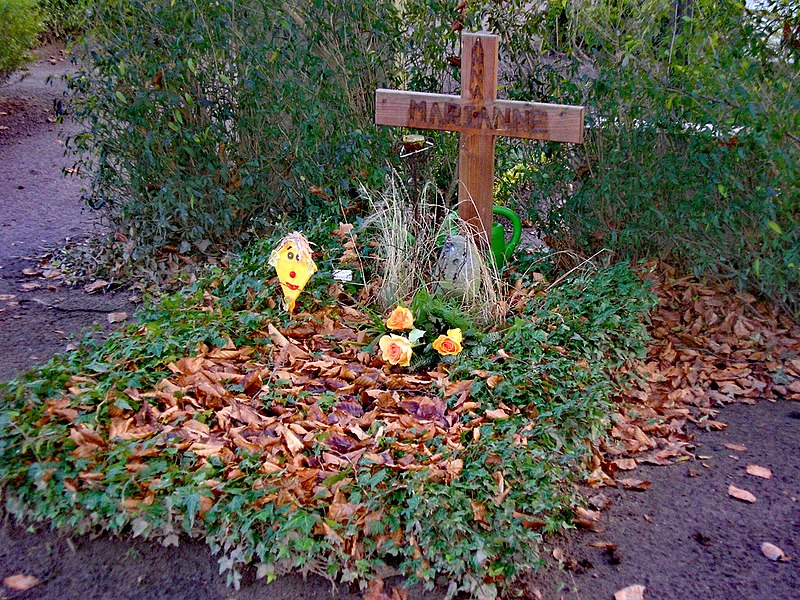
Following her death, Marianne was buried beside her beloved daughter in a cemetery in Lübeck.
For a woman whose life had been permanently shaped by the loss of her child, the burial brought the two together again after years of separation.
More Than 40 Years Later, Her Story Still Divides Public Opinion
The case of Marianne Bachmeier remains one of Germany’s most widely discussed examples of vigilante justice.
For many people, she was a mother who had suffered an unbearable loss and could no longer tolerate the thought of the man accused of murdering her daughter continuing to make disturbing claims about the child.
Supporters pointed to Grabowski’s previous convictions involving sexual offenses against children and argued that Marianne’s anger was understandable given the horrific circumstances.
They viewed her actions as revenge against a man who had committed an unforgivable crime and believed that her prison sentence did not adequately reflect the emotional circumstances behind the shooting.
Others, however, strongly disagreed. They argued that no individual should be allowed to decide who deserves to live or die, regardless of the crime committed against them or their family.
Critics maintained that Marianne should have allowed the courts to determine Grabowski’s punishment rather than taking justice into her own hands. They believed that allowing personal revenge to replace the legal process could undermine the principles of justice.
Ultimately, Marianne Bachmeier’s story remains a deeply emotional chapter in German criminal history. Some remember her as a mother driven beyond her limits by the brutal murder of her seven-year-old daughter. Others remember a woman who deliberately killed a defendant inside a courtroom.
More than four decades later, the central question remains: Was Marianne Bachmeier a grieving mother seeking revenge for an unimaginable tragedy, or did she cross a line that should never be crossed?
What is your opinion? Do you believe Marianne Bachmeier’s actions were understandable given what happened to her daughter, or should she have left justice entirely in the hands of the courts? Share your thoughts in the comments section on Facebook.