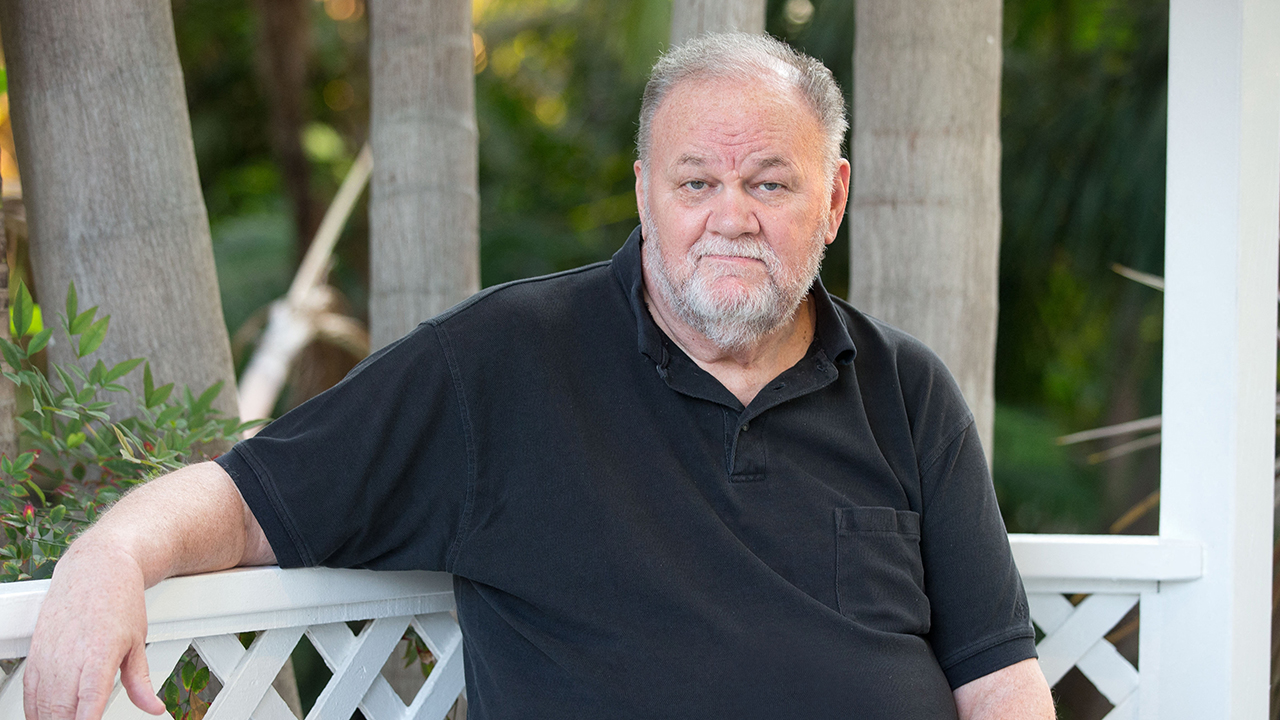
Thomas Markle Sr., the estranged father of Meghan Markle, the Duchess of Sussex, has been returned to federal custody after allegedly removing his court-ordered ankle monitor. However, a judge has ordered that he be housed separately from other inmates while he awaits further proceedings in his child pornography case.
Markle Sr., 82, a former Hollywood lighting director who, according to IMDb, received two Daytime Emmy Awards for his work on General Hospital, was arrested on November 6 at an assisted living facility in Lakeland, Florida.
Federal investigators reportedly discovered suspected child sexual abuse material inside storage units in the Los Angeles area, where Markle had previously lived. According to the BBC, he had been paying rent on the units from 2008 until October of this year.
Authorities seized approximately 78 items during the investigation, including photographs, film negatives, slides and books containing images of child sexual abuse. The discovery eventually led to federal charges against Markle, who has not yet entered a plea.
Despite the serious allegations, Markle was initially granted pretrial release, allowing him to return to the Lakeland assisted living facility where he had been receiving care.
However, his release was short-lived.
According to authorities, Markle allegedly removed his court-ordered ankle monitoring device at approximately 1:45 a.m. on November 10. The incident prompted officials to take him back into custody.
“Release conditions are court orders, not suggestions,” First Assistant U.S. Attorney Bill Essayli said, according to the Associated Press.
Thomas Markle Sr. Ordered to Be Separated From Other Inmates
Following the incident, Markle appeared at a hearing on the same day, where U.S. Magistrate Judge Lindsay S. Griffin revoked his pretrial release and ordered that he remain detained while the case moves forward.
However, the judge also addressed the conditions under which Markle would be held during his time in custody.
According to People, Griffin ordered that he be housed “in a corrections facility separate, to the extent practicable, from persons awaiting or serving sentences or being held in custody pending appeal.”
The decision means authorities must make reasonable efforts to keep Markle separated from other individuals who are serving prison sentences, awaiting sentencing or being held while appealing their cases.
Nevertheless, his current detention arrangements may not necessarily be permanent.
There remains a possibility that Markle could eventually be released again if his legal representatives manage to establish appropriate living arrangements and satisfy the court’s requirements. Court records reportedly indicate that “the matter of bond could be reconsidered” if his attorneys are able to secure “suitable conditions” for him to live.
For now, however, he remains in federal custody as his legal team considers its next steps.
🚨 BREAKING: Meghan Markle’s dad Thomas Markle Sr. has a brand new mugshot … after allegedly cutting off his ankle monitor and landing himself back behind bars.
Details: https://t.co/tkNJOHJFiM https://t.co/9XjlDIB7Ky
— TMZ (@TMZ) November 11, 2026
Meghan Markle’s Reaction to Her Father’s Arrest
As Thomas Markle Sr. awaits his next court hearing, his daughter, Meghan Markle, 45, has continued to remain publicly silent about his arrest.
The Duchess of Sussex previously spoke about her estrangement from her father, explaining that the decision to distance herself was made to “protect” her family.
Although Meghan has been focusing on her professional responsibilities, the latest developments involving her father have reportedly taken an emotional toll.
A source close to the Duchess spoke to People about how she has been dealing with the situation as news of her father’s arrest continues to emerge.
“This continues to be incredibly upsetting for Meghan,” the insider said. “She’s been following the news as it unfolds, and it’s a lot to take in.”
For the time being, Thomas Markle Sr. remains in federal custody while the court considers his fitness to stand trial and whether alternative housing arrangements could eventually make another release possible.