Long before he became a Senate candidate, El-Sayed was a student at the University of Michigan, preparing to graduate with an ambitious plan to pursue a career in medicine.
In 2007, he graduated with the highest distinction and delivered the student commencement address. The university’s commencement speaker that year was former President Bill Clinton, who made an unexpected observation about the young graduate.
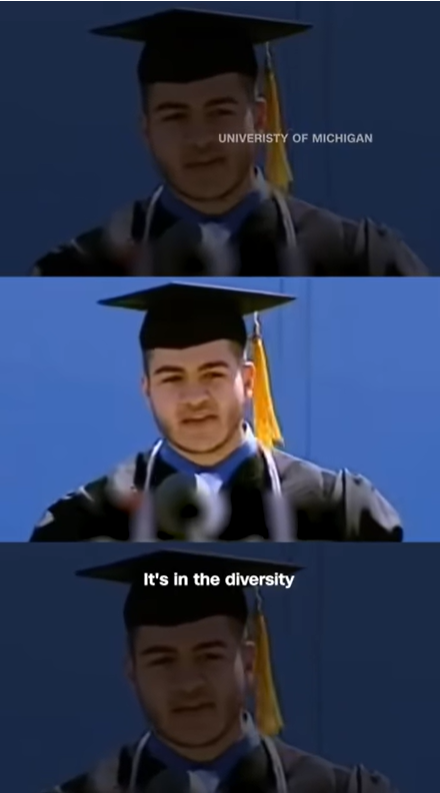
During his address, Clinton publicly praised El-Sayed’s speech, telling the audience, “I wish every person in the world who believes that we are fated to have a clash of civilizations and cannot reach across the religious divides could have heard you speak today. I just wish every person in the world could have heard you speak today.”
Clinton’s admiration did not end when the commencement ceremony was over. In a 2017 interview with Forbes, El-Sayed recalled that the former president approached him privately after their speeches, while graduates were changing out of their academic gowns.
Clinton asked a question that caught him off guard: Why was he planning to attend medical school? El-Sayed said he was surprised because no one had previously asked him to explain why he wanted to pursue medicine. Clinton then shared what he had noticed about the young graduate.

“You know you have a real gift for speaking and I hope you will consider a career in public service,” Clinton told him.
El-Sayed responded with humor, suggesting that his name might make a political career difficult. “Mr. President, I don’t know if you saw my name, but it’s got 11 letters in it — and that’s just my first name — so I don’t know if that’s going to be possible for me,” he recalled telling Clinton.
At the time, El-Sayed was focused on becoming a surgeon, and politics was not part of his immediate plans. Still, the conversation stayed with him. A decade later, as he prepared to run for governor of Michigan in 2018, he acknowledged that Clinton’s advice had helped inspire him to pursue public service.
“Fast forward 10 years later and where we are in our politics, I thought a lot about what President Clinton told me that day, and I think there is a responsibility to public service,” he explained.
El-Sayed later said the former president’s encouragement had been instrumental in motivating him to run for office. It would take another nine years before he won his historic Senate race, but Clinton had recognized his potential to make a difference in public life long before that achievement.
He Grew Up in Detroit With Parents Who Had Their Own American Dream
El-Sayed was born on October 31, 1984, in Rochester Hills, Michigan, to parents who had immigrated from Egypt. He grew up in Bloomfield Hills, a Detroit suburb, in a household shaped by academic ambition, athletic interests, and a strong connection to his family’s Egyptian heritage.
His father, an automotive engineer from Alexandria, Egypt, moved to the United States in pursuit of opportunities in the automotive industry. His mother had studied medicine in Egypt before establishing a career in the United States as a psychiatric pediatric nurse practitioner.
Both parents passed on a strong sense of social responsibility to their son. They were outspoken critics of the authoritarian government in their native Egypt, and their experiences helped shape his understanding of the importance of social change and standing up for what he believed was right.
In a 2016 profile published by Columbia University, El-Sayed described his upbringing as deeply privileged. At the same time, he said he believed those opportunities carried an obligation to help people who had not been given the same advantages.
“Dignifying those opportunities to me means being able to right inequities for all,” he explained.
His childhood, however, was not without difficult experiences. In the aftermath of the September 11 attacks, he faced hostility because of his Arab-American identity.
While playing high school football, he eventually became involved in a confrontation after repeatedly being taunted by a member of an opposing team. His coach pulled him aside afterward and offered advice that would remain with him for years.
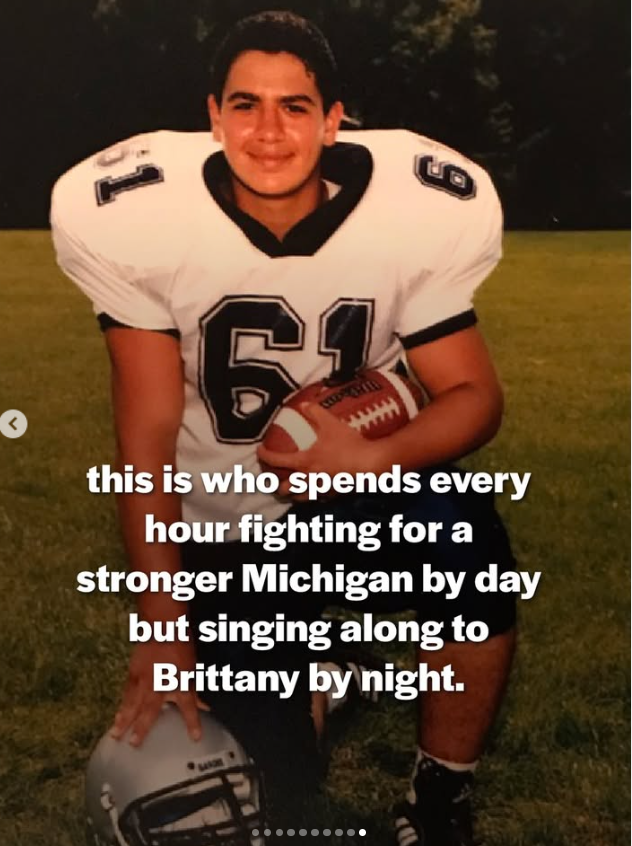
“You are going to be Abdul El-Sayed for the rest of your life, and you can decide to either use that as an excuse or a motivation.”
El-Sayed took the message to heart. Rather than allowing those experiences to define or limit him, he eventually channeled them into his academic and professional ambitions.
He went on to attend the University of Michigan, where he studied biology and political science and played on the university’s club lacrosse team. After graduating in 2007, he began his medical training before receiving a prestigious Rhodes Scholarship to study at the University of Oxford.
At Oxford, he earned a doctorate in public health before completing his medical degree at Columbia University in 2014. His education across three major institutions laid the groundwork for his later work in epidemiology and public health.
One Patient Changed the Direction of His Medical Career
Although El-Sayed initially pictured himself becoming a surgeon, an experience during his medical training eventually changed the direction of his career. While completing a sub-internship in internal medicine at Allen Hospital, he encountered an older homeless woman who had fallen and struck her head while intoxicated.
Medical staff initially planned to treat her injury and send her home. El-Sayed, however, suspected that something more serious was happening and pushed for a more thorough medical assessment. His concerns proved justified: the woman was suffering from adrenal insufficiency associated with HIV/AIDS and needed more than treatment for the immediate injury.
After helping arrange her admission and treatment, El-Sayed also organized a transfer to a rehabilitation facility that accepted patients with AIDS. But shortly before her discharge, the woman announced that she intended to return home with her daughter. He encouraged her to consider rehabilitation, yet she remained determined to leave.
Two weeks later, El-Sayed encountered her again. She was sleeping on a subway bench.
The experience affected him deeply. Despite receiving medical attention, the woman had returned to the same vulnerable circumstances that had contributed to her health problems in the first place.
For El-Sayed, the encounter revealed a problem much larger than a single medical emergency. He began questioning whether treating patients one at a time could ever be enough when the social and economic conditions surrounding their lives continued to put their health at risk.
“The safety net failed her,” he reflected.
Eventually, he withdrew his application for a medical residency and redirected his ambitions toward public health. He decided he wanted to address the broader circumstances affecting people’s health before they reached a hospital, rather than focusing exclusively on treating illnesses after they developed.
That decision ultimately brought him back to Michigan. In August 2015, when he was just 30 years old, Mayor Mike Duggan appointed him executive director of the Detroit Health Department. The appointment made him one of the youngest people to lead the health department of a major American city.
His responsibilities included rebuilding public health services following Detroit’s 2013 bankruptcy and confronting serious challenges such as infant mortality, lead exposure, obesity, and limited access to healthy food.
One of his efforts involved opposing increased sulfur dioxide emissions from a refinery in southwest Detroit. Following community protests and pressure from city officials, the company voluntarily invested $10 million to reduce its emissions.
The work gave El-Sayed an opportunity to connect his medical knowledge with the wider social issues that had increasingly shaped his professional interests. It also marked an important step in the public health career that would eventually lead him toward elected office.
He Met His Future Wife at University, and They Married While Still Students
While El-Sayed was building his academic and professional future, another important part of his life was taking shape at the University of Michigan. It was there that he met Sarah Jukaku, the woman who would eventually become his wife.
Their relationship developed while they were both students, balancing demanding academic schedules and thinking about the careers they hoped to build. The couple married in 2006, when Jukaku was still a freshman and El-Sayed was an undergraduate.
In a 2006 interview with The Michigan Daily, the couple offered a glimpse into their early relationship and explained why they had decided to marry at such a young age.
“When he proposed to me, I was a freshman,” Jukaku recalled. “I was young, and one of the things he said was, ‘We’re still growing, now we can grow together.'”
Sitting beside her during the interview, El-Sayed responded with a grin: “I’m romantic.”
Their decision was also shaped by their Muslim faith and their shared understanding of commitment. At the time, El-Sayed explained that their religious values influenced how they viewed relationships and marriage.
“Islam teaches us not to let our desires play too much of a role in our lives,” he said. “The fact that we’re so willing to commit to marriage is a byproduct of this general self-control.”
The couple also described how marriage gave them an opportunity to build their relationship while continuing to pursue their academic ambitions. They spent time visiting libraries, going out for dinner, and enjoying one of their favorite shared activities: getting ice cream.
“Getting ice cream is the number-one thing we do together,” El-Sayed joked.
Their early married life also involved practical adjustments. They followed a traditional two-stage marriage arrangement in which couples initially lived separately while getting to know each other before beginning their life together under one roof.
As their careers developed, the couple had to make decisions about where to live and how to accommodate their individual ambitions. At one point, El-Sayed was considering medical opportunities outside Michigan, including the possibility of attending Harvard. Jukaku, who hoped to become a high school teacher, was prepared to accompany him.
El-Sayed also temporarily gave up playing lacrosse to devote more time to their relationship, despite having spent years participating in the sport.
“I wanted to make sure this went the right way,” he explained. “I figured you can only play lacrosse for so long, but you’ll be married for the rest of your life.”
Jukaku appeared pleased with his decision, responding, “Good choice. I tried to tell you earlier.”
Looking back on those early years, the couple described marriage as an opportunity to grow together, not something that forced either of them to abandon their individual goals.
“Whatever we have to rethink or change is for the better,” Jukaku said. “It wasn’t anything we lost.”
Meet the Woman Behind His Political Journey — and Their Two Daughters
Today, Jukaku is a psychiatrist who completed her medical education at Columbia University in 2015. She later completed psychiatry residencies at Cornell University and the University of Michigan and established a private practice in Ann Arbor.
Together, she and El-Sayed have built a family and are parents to two daughters, Emmalee and Serene. Their older daughter, Emmalee, celebrated her eighth birthday in August 2026.
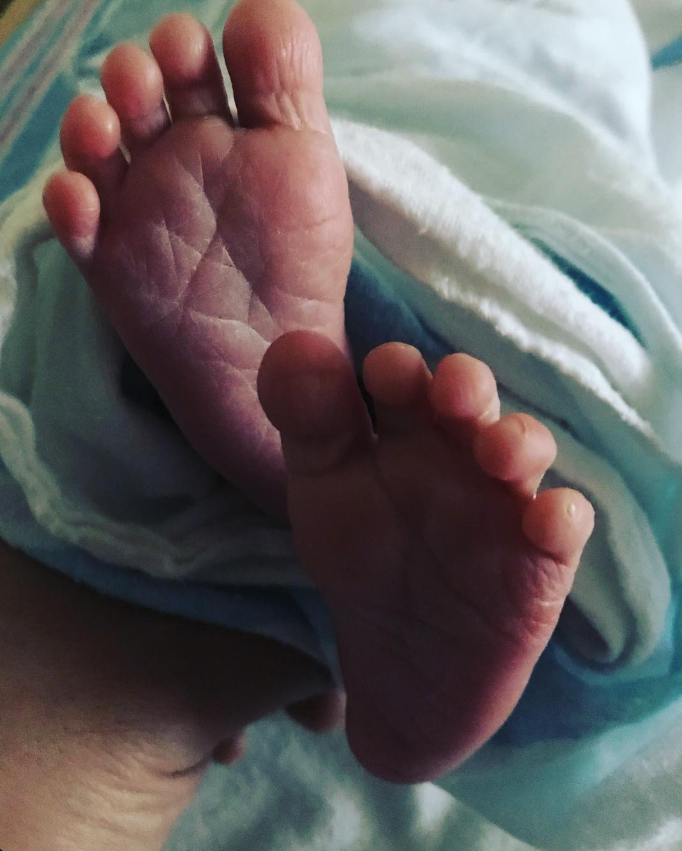
Their younger daughter, Serene, was born in January 2023. According to El-Sayed’s announcement on Instagram, she arrived at 10:36 a.m. on January 18, weighing 7 pounds and 14 ounces.
Sharing the news, he wrote: “Sarah and baby are thriving, Alhamdulillah. Watching Emmalee love on her little sister is a kind of joy I didn’t know existed.”
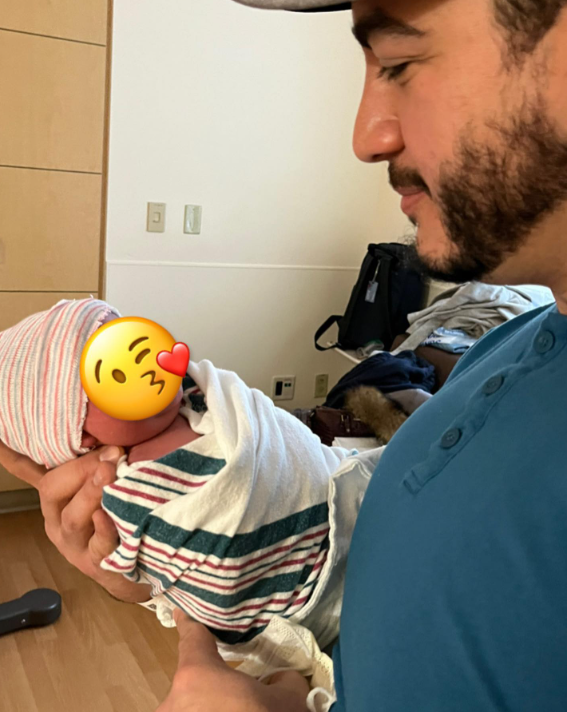
Although the couple has generally kept their children away from the public spotlight, Jukaku has occasionally appeared beside her husband during significant moments in his political career.
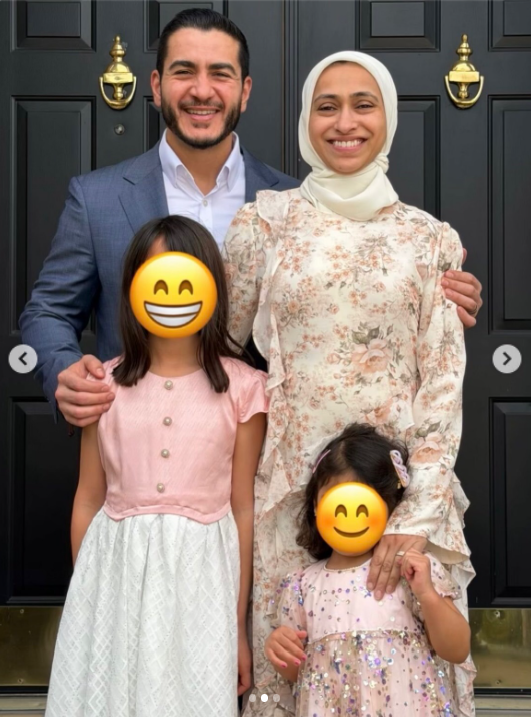
At his final campaign rally before Election Day, held in Detroit on November 2, Jukaku took the stage to explain why she believed her husband would make a meaningful difference for Michigan residents.
“Michiganders deserve a fighter like Abdul,” she told the crowd. “He will show up for you and your family the way he shows up for me and our family.”
She also spoke about the consistency she saw between the man voters encountered on the campaign trail and the husband and father she knew at home.
“I have always known that there was something special about Abdul,” she said. “Abdul is the same to me and my daughters as he is to you. He says the same things no matter where he is and no matter who he’s talking to, because he believes and means those things. And that’s what makes him such an unusual politician.”
Jukaku also joked about her husband’s independence, saying that no corporation, billionaire, or special interest group could tell him what to do or say.
“Except maybe me sometimes,” she added.
The Medical Emergency After Childbirth That Changed Her View of Unions
Beyond supporting her husband’s political ambitions, Jukaku has also shared a personal experience that showed her why workers need people willing to stand up for their rights. In an interview shared on El-Sayed’s Instagram account, she discussed the serious medical complications she experienced after giving birth to their first daughter.
At the time, Jukaku was completing her medical residency. She said complications developed after childbirth, forcing her to return to the hospital approximately 11 or 12 days after delivering her daughter.
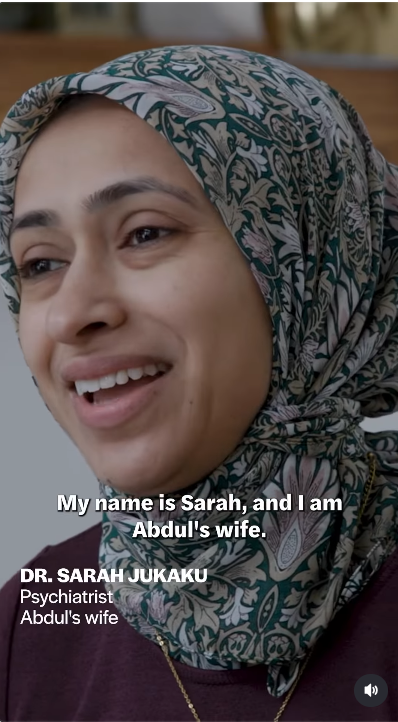
She was experiencing considerable pelvic pain and had difficulty walking. After consulting a physician and a physical therapist, she was advised to pursue further treatment.
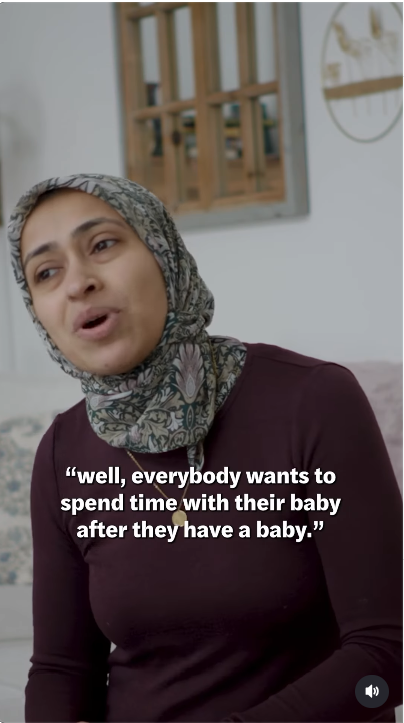
However, when she contacted the appropriate office to ask how she could arrange the time away from work that she needed, she said the person who answered dismissed her concerns.
Jukaku recalled being told: “Well, everybody wants to spend time with their baby after they have a baby, and that’s not a reason to be off of work.”
The response left her upset. She was not simply asking for additional time with her newborn; she was dealing with genuine medical complications that were affecting her ability to walk and recover.
Rather than giving up, she decided to contact her union. Jukaku recalled speaking with a representative named Robin, who reassured her that she was entitled to medical leave and offered to help her work through the process.
She remembered the representative saying: “That is not okay; you are definitely entitled to medical leave; we’ll figure this out together.”
The interaction left a lasting impression. Jukaku said she finally felt heard and supported, and her medical leave was eventually approved.
Interestingly, she also credited El-Sayed with helping her understand why physicians should organize and advocate for their workplace rights.

“He’s really the one who opened my eyes to, you know, the fact that physicians should be unionizing and right like these are the things that unions have historically provided us with,” she explained.
She went on to highlight some of the protections workers have gained through unions, including the end of child labor, weekends, and vacation time.
For the couple, the experience reinforced the importance of protecting workers, especially those in demanding professions such as medicine. Jukaku’s account also offered a personal example of how their professional interests and shared beliefs have shaped their family life.
A New Chapter for the Family After His Historic Victory
Following his election victory, El-Sayed is preparing to begin a new chapter in Washington. His swearing-in is scheduled for January 2027, when he will take his place in the United States Senate as the first Muslim elected to the chamber.
His achievement represents a remarkable turn in a journey that began with a young university student who expected to become a surgeon. Along the way, he became a public health official, built a family with his college sweetheart, and eventually pursued the career in public service that Bill Clinton had encouraged him to consider years earlier.
His path was shaped by more than academic success or political ambition. It also involved the lessons of his immigrant parents, the challenges he faced growing up, the patient whose circumstances changed his understanding of medicine, and the decisions he and Jukaku made while building their lives together.
Now, as his election makes him a historic figure in American politics, the people closest to him have witnessed the personal experiences, sacrifices, and choices that helped bring him to this point.
For El-Sayed, the next chapter will unfold in the Senate. But the story behind his rise remains closely connected to the family he and Jukaku have built, the values that shaped his upbringing, and the unexpected encouragement that first opened his eyes to a future in public service.