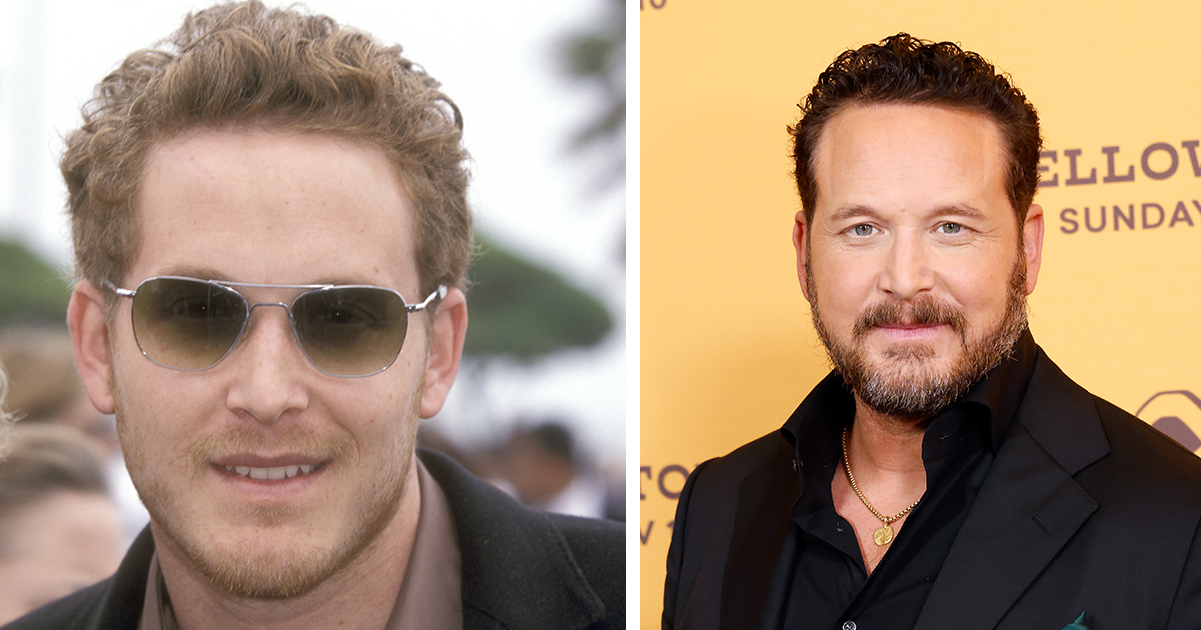
Before he ever met his father, Cole Hauser had already seen him on television. Their eventual reunion, however, was far from a picture-perfect family moment. Instead, it left the young actor living alone on a docked boat, determined to pursue a Hollywood dream that few people believed he could achieve. Decades later, he would become one of television’s most recognizable cowboys.
Today, Hauser is celebrated as a devoted family man and is widely known for portraying the tough, uncompromising ranch foreman Rip Wheeler in Yellowstone. With his quiet intensity, commanding screen presence and ability to convey loyalty without saying much, he has become one of the show’s most popular characters.
But behind the success is a far more complicated personal journey. Long before he became a familiar face on television, Hauser was a fatherless child who moved from place to place, searching for stability while pursuing a career in an industry that never handed him anything easily.
His journey to Hollywood was shaped by independence, difficult family relationships and a determination to make something of himself against the odds.
This is the real story of Cole Hauser.
A Childhood Between Ranches and Constant Change
Cole Hauser was born on a ranch just north of Santa Barbara, California. His earliest memories were filled with the kind of experiences often associated with classic Westerns: riding horses, exploring wide-open pastures and growing up surrounded by the rugged freedom of rural life, according to Men’s Journal.
When he was just four years old, Hauser and his mother relocated to a sprawling 1,500-acre ranch outside Eugene, Oregon. Armed with a BB gun and an adventurous personality, he spent much of his childhood enjoying the outdoors. Looking back, he would later describe that period as the happiest time of his life.
His mother, whom he has described as a self-proclaimed vagabond and hippie, preferred a nomadic way of living. As a result, Hauser’s childhood was far from settled, and another major move eventually disrupted the life he had begun to enjoy.
This time, the family relocated to Clearwater, Florida, a transition Hauser once admitted he “wouldn’t wish on anyone.”
Eventually, they made their way back to California. By the time he was 12, Hauser had unexpectedly found himself in an acting class. His initial interest, however, had little to do with a serious ambition to become an actor.
As he candidly explained, the appeal was much simpler: “There were good-looking girls, and you do a few plays.”
But what began as a casual teenage activity soon developed into something much bigger. Before long, Hauser discovered that he genuinely enjoyed acting and began imagining a future in the entertainment industry.
Hollywood Was in His Blood, But Success Wasn’t Handed to Him
When Hauser eventually told his mother that he wanted to pursue acting professionally, she revealed a surprising piece of family history. Her maiden name was Warner — the same Warner family associated with Warner Bros.
In other words, Hauser came from a family with deep connections to Hollywood.
Yet that heritage did not translate into an easy path into the business. Rather than using the family name to secure opportunities for him, his mother insisted that he prove himself and earn every chance he received.
She began sending him on exhausting five-hour bus journeys from their hometown to Los Angeles so he could attend auditions.
The routine was demanding. Hauser would arrive in the city, make his way to the casting studio, spend only a few minutes in the audition room and then begin the five-hour journey back home.
He repeated the process several times, gaining experience while learning just how difficult breaking into Hollywood could be.
Then, after putting him through those repeated journeys, his mother revealed another major family secret: his father was also an actor.
His father was none other than Wings Hauser.
Until that point, Cole had never met him. In fact, he did not even know who his father was until he was around nine or ten years old, when he happened to see him on television.
Hauser later recalled the moment he discovered the connection:
“I waited for the finish of the film, and I saw Wings Hauser [in the credits]. So, I went into my mom’s room, and I said, ‘Hey, Mom. I just saw a guy on TV, his name’s Wings Hauser.’ And she looked at me and went, ‘Wow!’ And I said, ‘Yeah, I saw this guy.’ And she goes, ‘Yeah, well, let’s talk about that.’”
At 15, Hauser finally met his father and moved to Los Angeles to live with him, hoping that being closer to the entertainment industry would help him pursue his acting ambitions.
However, the reunion did not unfold as he might have hoped. His father was struggling with serious substance abuse problems and was unable to offer the stability or support the teenager needed.
Hauser soon realized that, despite living with his father, he would largely have to depend on himself.
A Teenager Living Alone on a Boat While Chasing Hollywood
Rather than settling into a comfortable family home or a typical Hollywood apartment, Hauser found himself living alone aboard a docked PT boat in Marina del Rey.
For many teenagers, such an unusual arrangement might have been overwhelming. But Hauser remembered the experience differently, viewing it as an opportunity to enjoy independence and freedom at an early age.
“That was an awesome time because it meant freedom,” he later recalled.
While navigating life on his own, Hauser continued attending auditions and taking odd jobs to support himself. His determination eventually began to pay off.
In 1992, he landed his first major breakthrough with a role in the film School Ties, appearing alongside several actors who would later become major Hollywood stars, including Matt Damon and Ben Affleck.
At the time, Hauser was still inexperienced in the film industry. Recognizing that he was new to the profession, legendary cinematographer Freddie Francis took a personal interest in helping him understand the practical demands of working on a movie set.
Francis mentored the young actor, teaching him essential skills such as hitting his marks and understanding how scenes were blocked.
It was an important learning experience that helped Hauser find his footing in an industry where experience and professionalism mattered just as much as talent.
From that point forward, his career gradually began to build momentum.
How Cole Hauser Became Yellowstone’s Rip Wheeler
Over the years, Hauser established himself as an actor capable of portraying tough, intense and often complicated characters.
His film credits included performances in Dazed and Confused, Good Will Hunting and 2 Fast 2 Furious, helping him develop the kind of screen presence that would eventually make him a natural fit for a major Western drama.
That opportunity arrived when he was cast as Rip Wheeler in Yellowstone.
Playing the hard-edged but deeply loyal ranch foreman required more than simply looking the part. Hauser needed to convincingly portray a man whose life revolved around ranch work, horses and the demanding realities of the American West.
Although his childhood experiences riding horses in Oregon gave him a useful foundation, he did not rely solely on those early memories. Instead, he committed himself to additional training, learning to rope and ride with the confidence and skill of someone who had spent a lifetime working on the land.
His dedication paid off. Hauser’s portrayal of Rip Wheeler earned admiration from audiences and critics alike, turning the character into one of the most recognizable figures on television.
The performance also earned approval from someone whose opinion clearly mattered to him: his father.
When asked whether Wings Hauser was proud of his work, Cole did not hesitate.
“Absolutely,” he said. “Yeah, he’s a huge fan of the show and is obviously very proud of what I’ve done in it.”
Interestingly, as Hauser became increasingly associated with the world of Yellowstone, he also began discovering that his own family’s connection to the American West was much deeper than he had previously realized.
Discovering a Family Legacy in Montana
Years after Yellowstone premiered, Hauser traveled to Montana with his eldest son to explore his family’s history and learn more about the roots that connected him to the state.
What they uncovered was a remarkable family legacy stretching back to the earliest chapters of American history.
Hauser discovered that his great-great-grandfather, Samuel T. Hauser, had played a role in helping finance the Lewis and Clark Expedition. He had also served as Montana’s first governor.
The discovery helped explain a connection Hauser had always felt toward the state, even though he had never fully understood where that feeling came from.
“I’ve always had this love for the state but didn’t really know why,” he reflected. “It makes so much sense now. I mean, my family has been there since the beginning of time.”
The revelation added another layer of meaning to his connection with the Western lifestyle he portrays on screen. What had initially seemed like a personal attraction to Montana and its ranching culture turned out to have deep historical roots within his own family.
Now that Hauser is a father himself, he also has a different understanding of the importance of family history, responsibility and the example parents set for their children.
He built his career through persistence, hard work and self-reliance — qualities that became essential during the difficult years of his childhood and early adulthood. Those same principles are now values he seeks to pass on to his own children.
Although Rip Wheeler remains Hauser’s most famous role and has introduced him to millions of viewers, his greatest accomplishment may be something far more personal.
Beyond the television success, the Hollywood recognition and the connection to a remarkable family history, Hauser has built a life shaped by determination and independence — overcoming an unsettled childhood and difficult beginnings to create the family and career he has today.